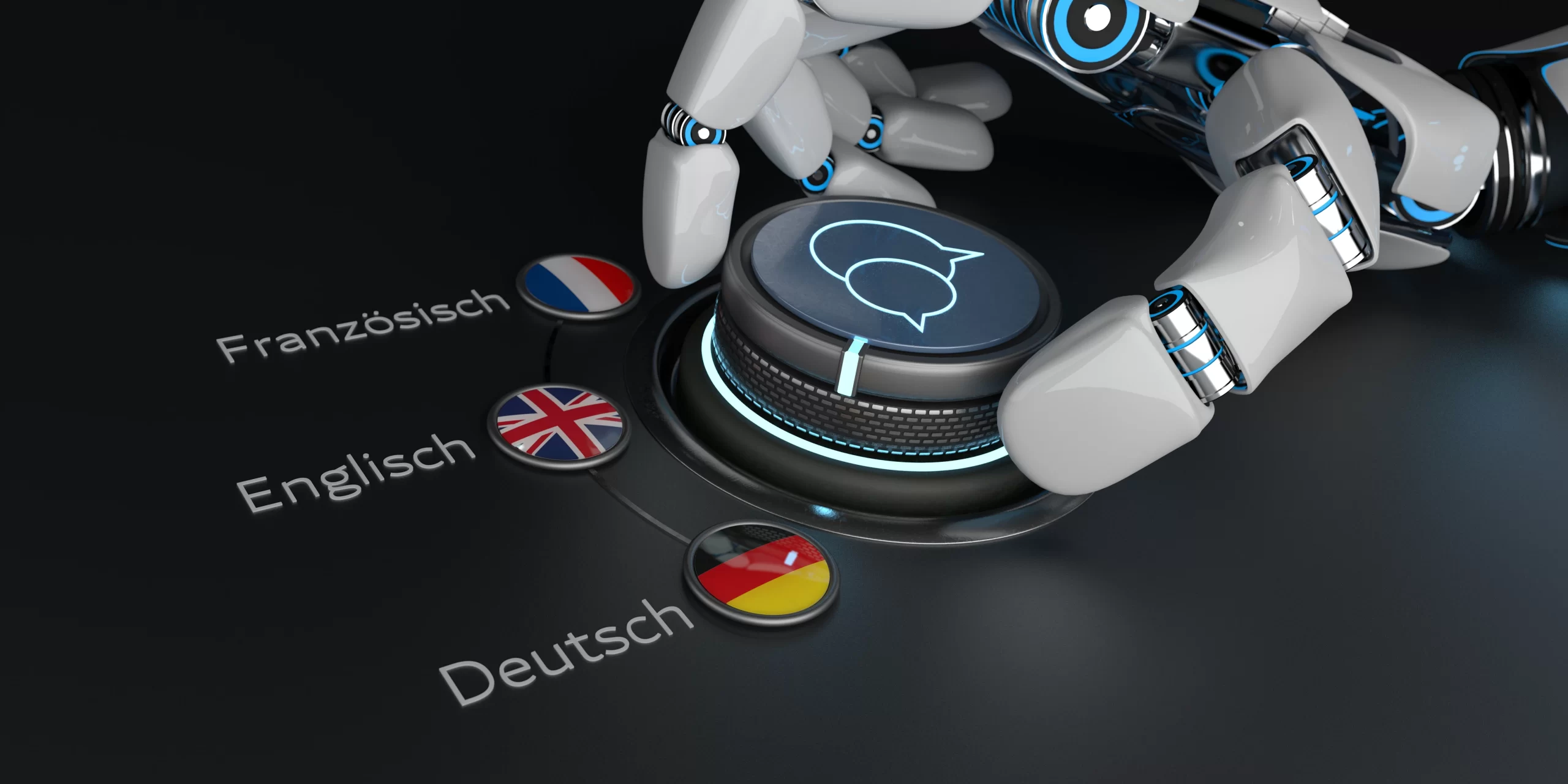

What if a business could translate thousands of words in minutes instead of waiting days for a manual translation? That is exactly where Machine Translation comes in.
But how does automated translation actually work, and is it suitable for every type of content? In this guide, we’ll explain what Machine Translation is, explore its most common types and real-world use cases, and look at best practices for using (MT) effectively while maintaining translation quality.
In Short
- Machine Translation (MT) is the automated process of translating content from one language to another using computer systems and translation algorithms.
- The main types of Machine Translation include Rule-Based (RBMT), Statistical (SMT), Neural (NMT), and Hybrid Machine Translation.
- Automated translation is useful for website content, e-commerce, customer support, internal communication, subtitles and captions, technical documentation, and education.
- Best practices include choosing the right translation technology, using clear source content, maintaining consistent terminology, adding human review, and considering localization alongside translation.
- MT and human translation can work together: MT can handle large volumes and repetitive content, while professional translators provide contextual understanding, cultural adaptation, quality control, and specialized expertise.
- For businesses, the right approach depends on the content and its purpose. Routine, high-volume content may benefit from automation, while technical, medical, legal, creative, or culturally sensitive content may require professional human review.
What Is Machine Translation?
At its simplest, machine translation (MT) is a process in which computer software translates text from one language to another without any human intervention using computer systems and translation algorithms.
Unlike traditional translation, where a professional translator interprets and rewrites the content or does Technical Manual Translation Services, MT can process text automatically and generate a translated version within seconds.
What are the main types of Machine Translation?
MT has evolved through several approaches, each with different capabilities. There are 3 types of automated translation methods:
|
Type of Machine Translation |
How It Works |
|
Rule-Based Machine Translation (RBMT) |
Uses dictionaries and predefined grammatical rules |
|
Statistical Machine Translation (SMT) |
Uses statistical patterns learned from large language datasets |
|
Neural Machine Translation (NMT) |
Uses neural networks to analyze language patterns and context |
Besides the main 3 types of automated translation, there is Hybrid Machine Translation, which combines multiple translation approaches
Today, (NMT) is widely used in modern machine translation systems, while AI-powered approaches continue to expand the capabilities of automated translation.
What Are the Common Use Cases of Machine Translation?
Automated translation is commonly used for:
- Website translation: Translating large numbers of web pages for international audiences.
- E-commerce: Processing product descriptions, categories, and customer-facing content.
- Customer support: Helping businesses handle multilingual inquiries and communications.
- Internal communication: Supporting communication between employees who speak different languages.
- Subtitles and captions: Creating initial translations for video content and multilingual captions.
- Technical documentation: Processing repetitive or standardized Technical Document Translation as part of a professional translation workflow.
- Education: Assisting students in studying and translating courses into different languages and foreign sources
For specialized content, Machine Translation can often be used as part of a human Translation, where professional translators review and refine the output.
How Does Machine Translation Work?
MT systems process the source text and use algorithms trained on language data to generate an output in the target language. Modern automated translation systems may use several technologies, including:
Machine Learning
Machine learning allows translation systems to identify patterns from large datasets containing text in different languages.
These patterns help the system understand how words, phrases, grammar, and sentence structures relate to one another.
Neural Networks
Instead of translating every word separately, NMT systems can consider relationships between words and the broader sentence structure.
Natural Language Processing
Natural Language Processing (NLP) helps systems process and analyze human language. It can help identify linguistic structures, phrases, context, and other elements that influence how a sentence should be translated.
What Are the Best Practices for Using Machine Translation?
Getting useful results from Machine Translation involves more than simply entering text into a translation tool. Businesses should consider the type of content, the target audience, and the level of accuracy required.
Here are the most important things to pay attention to when using automated translation:
1. Choose the appropriate translation technology
A system that supports the required languages must be chosen to handle the terms used appropriately
2. Use clear and organized content
Clear sentences and structured terminology and content can make machine translation more effective
3. Add human review
Professional human review of computer software translations can be extremely important in cases such as legal and financial content, cross-cultural content, medical information, etc.
4. Think about localization, not just translation
A translated sentence may be linguistically correct while sounding unnatural to a local audience.
So you should consider translation and localization workflows that address cultural references, style, currencies, measurements and other local requirements.
Machine Translation vs. Human Translation
Automated translation and human translation serve different purposes and can also be used together.
|
Machine Translation |
Human Translation |
|
Processes large volumes quickly |
Provides deeper contextual understanding |
|
Useful for repetitive content |
Handles creative and complex content |
|
Can reduce manual workload |
Adapts content to cultural expectations |
|
Supports rapid multilingual communication |
Maintains tone and brand voice |
|
Useful for initial translation |
Provides professional review and quality control |
Can Machine Translation Replace Human Translation?
Will Machine Translation Replace Human Translation? The answer depends largely on the type of content and the required level of accuracy.
For many businesses, the choice does not have to be between completely automated translation and completely manual translation. An automated translation and human review workflow can combine speed with professional quality control.
So we can say, MT is increasingly being used as a tool that supports professional translators rather than simply replacing them.
The Difference Between MT and AI Translation
The terms machine translation and AI translation are sometimes used interchangeably, but they are not exactly the same. In simple terms:
- MT: automated translation using computational methods.
- AI Translation: AI-powered approaches to automated translation.
Modern AI translation can therefore be considered part of the broader evolution of automated translation technology.
Conclusion
Machine translation has transformed the way businesses approach multilingual communication. It can process large volumes of content quickly, support multiple languages, reduce repetitive workloads, and help organizations communicate across international markets.
For businesses, the key is to choose the right translation approach for each type of content. Need professional translation for your business? Contact Localizera to discuss your project and find the right translation solution for your content.
FAQs
-
What is automated translation?
It is the automated process of translating text from one language into another using computer translation systems and algorithms.
-
What are the most common types of Machine Translation?
The most common types include rule-based machine translation, statistical machine translation, neural machine translation, and hybrid machine translation.
-
What are the benefits of MT?
Key benefits include faster processing, scalability, lower costs for suitable content, consistent terminology, and support for multilingual communication.
-
Is Machine Translation accurate enough for business use?
Automated translation can be suitable for many routine business applications, but accuracy varies depending on the language pair, content type, terminology, and translation system. Sensitive or specialized content may require human review.
-
Can Machine Translation translate and localize content?
MT can translate content, but localization often requires additional cultural, linguistic, and contextual adaptation that may benefit from human expertise.
-
How Businesses Can Use Machine Translation
Automated translation can support businesses across many industries and workflows. Common applications include: marketing, E-commerce, Internal Communication, Documentation, and customer support.