
Breaking Barriers for Global AI
AI is rapidly transforming industries, from customer service chatbots to real-time translation tools. However, as businesses expand globally, a critical challenge emerges: How can AI models effectively understand and generate human language across different cultures, dialects, and linguistic nuances?
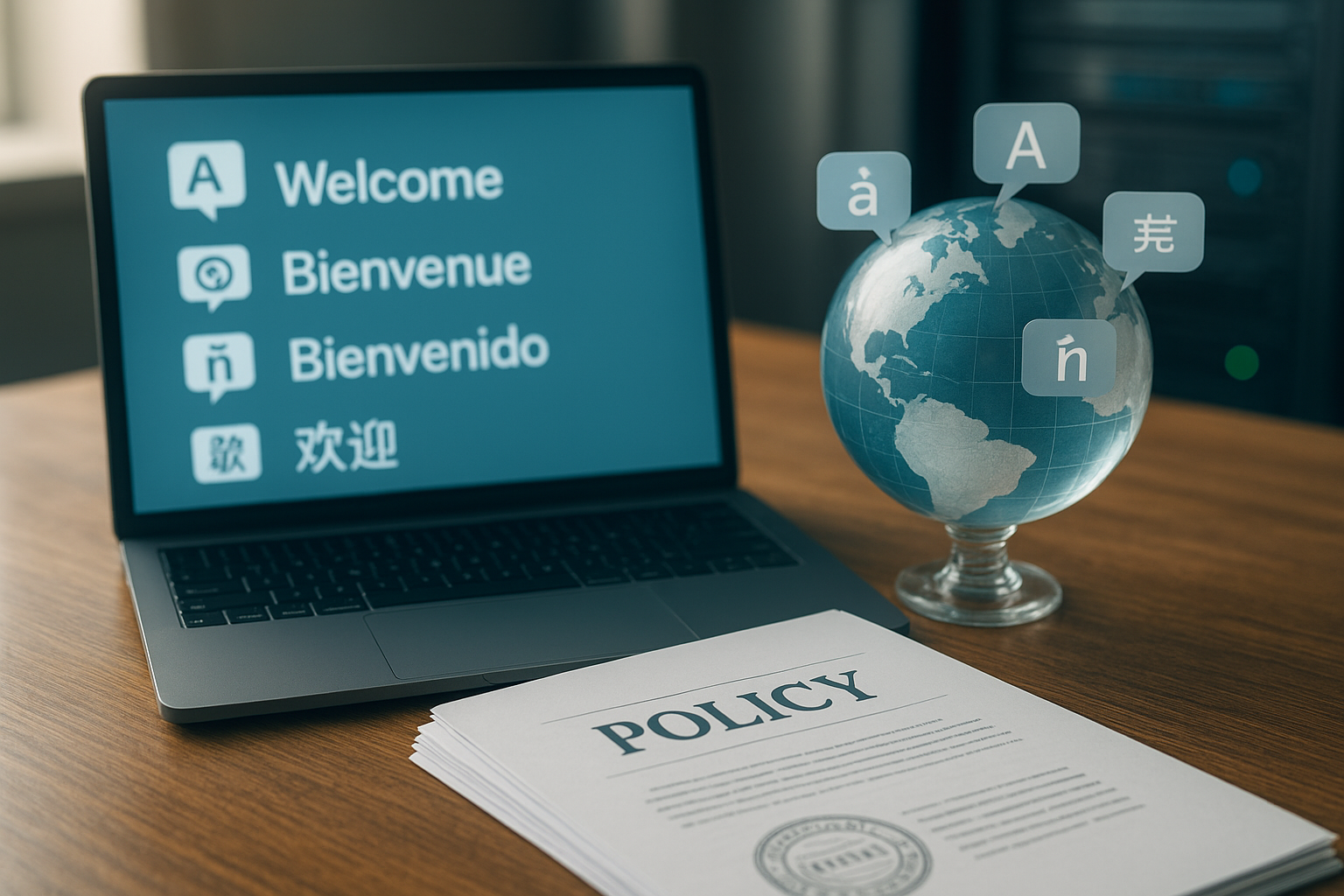
This is where localization of AI models for different languages comes into play. Unlike simple translation—which converts text from one language to another—AI localization involves AI model adaptation for multilingual use to comprehend and produce language in a way that feels natural, culturally appropriate, and contextually accurate for each target audience.
Why Localization of AI Models Matters
- Global Market Expansion
- Companies deploying AI-driven services (e.g., virtual assistants, automated content generation) must ensure their models work seamlessly in multiple languages.
- A poorly localized AI can lead to misunderstandings, brand damage, or even legal issues (e.g., offensive outputs in certain cultures).
- Beyond Direct Translation
- AI models trained only on English datasets struggle with:
Idioms & slang (e.g., “break a leg” means “good luck” in English but would confuse non-native speakers).
Formality levels (e.g., Japanese uses honorifics like “-san” and “-sama”).
Cultural references (e.g., jokes, historical context).
- Rising Demand for Multilingual AI
- Research shows that 60% of global consumers prefer products in their native language (CSA Research).
- Businesses using localized AI models see higher engagement, customer satisfaction, and conversion rates.
Types of AI Models That Require Localization for Global Use
As AI becomes more integrated into global business operations, many different types of AI models must be adapted to work effectively across languages and cultures. Localization ensures these models understand, process, and generate content that is linguistically accurate, culturally appropriate, and functionally reliable for diverse audiences.
Below, we explore the key AI models that commonly require localization and the unique challenges each faces when expanding into multilingual environments.
1. Natural Language Processing (NLP) Models
a) Large Language Models (LLMs) (e.g., GPT, Claude, Gemini)
Use Case: Text generation, summarization, question-answering, chatbots.
Localization Needs:
-
- Must be fine-tuned on language-specific datasets to avoid awkward or incorrect phrasing.
- Requires cultural adaptation (e.g., humor, idioms, references).
- Should handle formality levels (e.g., Japanese keigo vs. casual speech).
b) Sentiment Analysis & Opinion Mining Models
Use Case: Brand monitoring, customer feedback analysis, social media trends.
Localization Needs:
-
- Must recognize sarcasm, slang, and regional expressions (e.g., “sick” can mean “cool” in some English dialects).
- Should adapt to different review cultures (e.g., Germans tend to give harsher ratings than Americans).
c) Named Entity Recognition (NER) Models
Use Case: Extracting names, dates, locations from text (used in search engines, legal documents).
Localization Needs:
-
- Must recognize non-Latin scripts (e.g., Arabic, Chinese, Cyrillic).
- Should adapt to different naming conventions (e.g., surname-first order in East Asia).
2. Speech Recognition & Voice AI Models
a) Automatic Speech Recognition (ASR) (e.g., Siri, Alexa, Whisper)
Use Case: Voice assistants, transcription services, call center automation.
Localization Needs:
-
- Must support regional accents & dialects (e.g., Indian English vs. British English).
- Should handle code-switching (mixing languages in one sentence, common in multilingual regions like India or Africa).
b) Text-to-Speech (TTS) & Voice Synthesis
Use Case: Audiobooks, virtual assistants, accessibility tools.
Localization Needs:
-
- Requires native-sounding voice synthesis (e.g., avoiding robotic intonation in tonal languages like Mandarin).
- Must adjust speech speed & pauses to match cultural expectations (e.g., slower speech in formal Japanese).
3. Computer Vision & Multimodal AI Models
a) Optical Character Recognition (OCR)
Use Case: Document scanning, license plate recognition, receipt processing.
Localization Needs:
-
- Must recognize different writing systems (e.g., Arabic’s right-to-left script, Chinese logograms).
- Should handle handwriting variations (e.g., cursive vs. print in European languages).
b) Image & Video Captioning AI
Use Case: Social media alt-text generation, video subtitling.
Localization Needs:
-
- Must describe culturally specific elements (e.g., recognizing a kimono vs. a sari).
- Should avoid offensive misinterpretations (e.g., mislabeling religious symbols).
4. Recommendation & Personalization Engines
a) E-commerce & Content Recommendation AI
Use Case: Netflix suggestions, Amazon product recommendations.
Localization Needs:
-
- Must adapt to regional preferences (e.g., Bollywood vs. Hollywood recommendations in India).
- Should avoid cultural taboos (e.g., alcohol ads in Muslim-majority countries).
b) Search Engine Algorithms
Use Case: Google, Bing, local search platforms (e.g., Baidu, Yandex).
Localization Needs:
-
- Must prioritize regionally relevant results (e.g., “football” shows soccer in Europe but American football in the US).
- Should handle local search behaviors (e.g., voice search dominance in Mandarin-speaking markets).
5. AI-Powered Customer Support & Chatbots
a) Multilingual Chatbots (e.g., ChatGPT, Zendesk AI)
Use Case: Customer service, FAQ automation.
Localization Needs:
-
- Must switch languages dynamically based on user input.
- Should follow local etiquette (e.g., formal greetings in Korean, warmth in Latin American Spanish).
b) Email & Response Automation
Use Case: AI-generated email replies, ticket routing.
Localization Needs:
-
- Must adjust tone & politeness levels (e.g., German emails are direct, Japanese emails are highly formal).

How AI Localization Adapts to Different Industries
The localization of AI models varies significantly across industries, as each sector has unique linguistic, cultural, and regulatory requirements. Below, we explore how AI adaptation for multilingual use is applied in key fields, with industry-specific considerations.
1. Healthcare & Telemedicine
AI in healthcare must handle sensitive patient interactions while adapting to regional medical terminology and cultural norms. For example:
- A diagnostic chatbot in Latin America must recognize local terms like “gripe” (flu) instead of “influenza.”
- In Japan, AI voice assistants for elderly care should use formal speech (“keigo”) to maintain respect.
2. E-Commerce & Retail
Retail AI must align with local shopping behaviors and language nuances:
- A recommendation engine in Germany should prioritize direct payment options, while in Brazil, it must highlight installment plans (“parcelamento”).
- Visual search tools in the Middle East need to recognize regional attire like abayas and filter inappropriate suggestions.
3. Banking & Fintech
Financial AI requires strict localization for compliance and user trust:
- A fraud detection system in Nigeria must analyze transactions in Pidgin English and local dialects.
- In Islamic markets, AI loan approval systems must adhere to Sharia-compliant finance rules.
4. Customer Support & Chatbots
Multilingual chatbots must adapt to communication styles:
- In Korea, AI should use formal greetings, while in Australia, a casual tone is preferred.
- Sentiment analysis models must detect frustration in different languages to escalate issues appropriately.
5. Media & Entertainment
Streaming platforms and content AI require deep localization:
- A recommendation algorithm in India should prioritize Bollywood films, while in Mexico, it should highlight telenovelas.
- Subtitle generation AI must capture humor and idioms accurately across languages.

AI Without Borders: Localizera’s End-to-End Solution for Language-Specific Model Adaptation
For AI developers looking to expand their solutions globally, Localizera provides a critical competitive edge by streamlining the localization of AI models for different languages. Unlike generic translation services, we specialize in AI model adaptation for multilingual use, ensuring that machine learning systems don’t just translate words—they understand context, cultural nuances, and industry-specific requirements.
One of the biggest challenges in language-specific AI training is sourcing high-quality, regionally relevant datasets. Many AI teams struggle with limited linguistic resources, especially for underrepresented languages. Localizera bridges this gap by providing access to localized training corpora, expert linguist validation, and adaptive fine-tuning techniques. This means developers can deploy AI that truly “thinks” in the target language, rather than relying on error-prone direct translations.
Another key advantage is our expertise in cross-lingual machine learning localization, which optimizes AI performance across multiple languages without requiring separate models for each one. Through techniques like multilingual embeddings and parameter-efficient fine-tuning (PEFT), we help developers scale their AI globally while controlling costs and computational overhead.
Whether it’s a sentiment analysis model that detects regional slang or a voice assistant that adapts to local speech patterns, Localizera ensures AI behaves naturally in every market.
Beyond linguistic accuracy, we help developers navigate the hidden pitfalls of AI globalization—from regulatory compliance in fintech to cultural sensitivity in healthcare chatbots. Our solutions don’t just localize content; they align AI outputs with local expectations, building trust and engagement.
For AI teams aiming to go global, Localizera transforms localization from a bottleneck into a strategic accelerator—delivering AI that doesn’t just speak the language, but speaks to the user.
Case Study: Localizing an AI Chatbot for Latin American Markets
Background:
A fast-growing fintech company sought to expand its AI-powered customer support chatbot into Latin America. While the chatbot performed exceptionally well in English-speaking markets, early tests revealed critical gaps when interacting with Spanish-speaking users—particularly in Mexico, Colombia, and Argentina.
The challenges went beyond simple translation:
- Dialectal variations made the chatbot sound unnatural or even confusing (e.g., “carro” vs. “auto” for “car”).
- Financial terminology differed significantly (e.g., “credit score” vs. “historial crediticio”).
- Cultural communication styles varied—Mexican users expected polite, slightly formal interactions, while Argentinian customers preferred a more direct, conversational tone.
Localization Strategy:
To address these issues, the fintech partnered with Localizera to implement a three-phase localization approach:
- Data Enrichment & Dialect-Specific Training
– Collected and annotated region-specific customer service transcripts to capture local expressions, slang, and financial jargon.
– Fine-tuned the NLP model using transfer learning, adapting a base Spanish model to each country’s dialect without rebuilding from scratch.
- Cultural & Behavioral Adaptation
– Integrated locale-aware response templates to adjust tone based on the user’s country (e.g., formal address in Mexico, relaxed phrasing in Argentina).
– Trained the AI to recognize implicit queries (e.g., “¿Puedo pagar después?” in Mexico often signals a need for installment plans).
- Continuous Feedback Loop
– Deployed A/B testing with real users to refine responses.
– Used human-in-the-loop validation to flag ambiguous outputs (e.g., slang with double meanings like “plata” for “money” in some regions).
Results:
After 6 months of localized deployment:
– Customer satisfaction (CSAT) scores rose by 35% in target markets, with users praising the chatbot’s “natural” feel.
– Miscommunication errors dropped by 50%, reducing escalations to human agents.
– Conversion rates improved by 20% for upsell prompts (e.g., loan offers), as the AI better aligned with local financial behaviors.
For AI teams, the lesson is clear: Localizera’s end-to-end approach transforms multilingual AI from a compliance checkbox into a competitive advantage.

FAQs
What’s the difference between AI translation and AI localization?
AI translation converts text between languages, while localization adapts AI models to understand cultural context, dialects, and industry-specific terminology.
How long does it take to localize an AI model?
For high-resource languages, expect 2–4 months; low-resource languages may take 6+ months due to data scarcity.
Can one AI model handle multiple languages?
Yes, via multilingual architectures (e.g., mBERT), but fine-tuning per language improves accuracy.
How do you measure localization success?
Track metrics like user engagement, error rates, and CSAT scores compared to pre-localization baselines.
What’s the biggest challenge in AI localization?
Bias mitigation—ensuring models avoid stereotypes or offensive outputs across cultures.
Can localized AI handle dialects within the same language?
Yes, but requires additional training data (e.g., Latin American vs. European Spanish).
Is localization only for text-based AI?
No, it’s critical for speech recognition, computer vision, and multimodal AI too.
Have more questions? Reach out now for a tailored consultation from Localizera!