
The Secret to Smarter, Faster AI: AI-Powered Translation for Data Labeling Explained
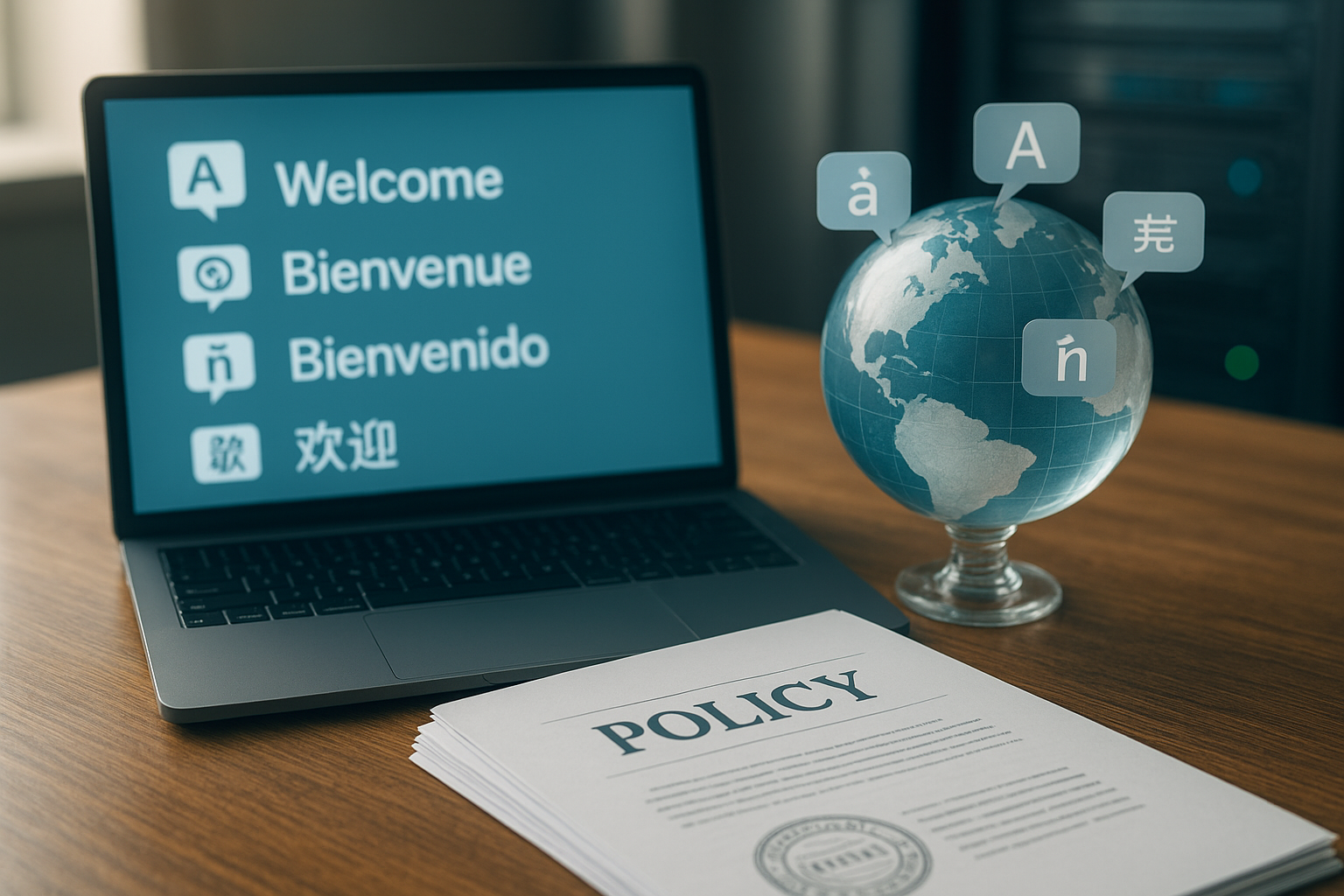
Let’s face it, AI isn’t just the future anymore; it’s the now. And when it comes to the translation industry, AI is flipping the script (literally). Gone are the days of clunky, word-by-word translations that make you go, “Huh?” Today, AI-powered translation for data labeling is stepping up, making waves, and honestly? It’s kind of a game-changer.
Think about it: AI models need data — tons of it — to learn, grow, and actually work. But here’s the kicker: that data needs to be labeled, and if you’re dealing with global markets, it needs to be translated too. Enter AI-assisted data translation and automated multilingual annotation. These tech-powered solutions are turning what used to be a tedious, error-prone process into something sleek, fast, and oh-so-accurate.
At Localizera, we’re all about riding this AI wave. We’ve mastered the art of blending cutting-edge tech with human expertise to deliver AI-driven language labeling that’s not just efficient but also culturally on point. Whether it’s training AI models for self-driving cars or helping e-commerce platforms go global, we’re here to make sure your data speaks every language—flawlessly.
So, buckle up. We’re diving into how AI is revolutionizing data labeling, why it matters, and how Localizera is leading the charge. Trust us, this is one tech trend you don’t want to sleep on.
What is Data Labeling and Why is it Important?
Alright, let’s break it down. You know how AI models are like super-smart students? Well, even the smartest students need good teachers, and that’s where data labeling comes in. In simple terms, data labeling is the process of tagging or annotating data so AI can understand it. Think of it as teaching AI to recognize a cat in a photo, understand sarcasm in a tweet, or even translate “How’s it going?” into 20 different languages without losing the vibe.
But here’s the thing: accurate data labeling is the secret sauce. If your labels are off, your AI’s gonna be, well, off. Imagine a self-driving car mistaking a stop sign for a picnic table. Whether it’s image recognition, natural language processing (NLP), or AI-powered translation for data labeling, the quality of your labels directly impacts how well your AI performs.
Now, let’s talk about the elephant in the room: manual data labeling. Sure, humans are great at understanding context and nuance, but let’s be real; it’s slow, expensive, and let’s not even get started on the burnout factor. Plus, when you’re dealing with automated multilingual annotation, things get even trickier. Translating and labeling data across multiple languages manually? That’s a one-way ticket to chaos.
This is where AI-assisted data translation and AI-driven language labeling come to the rescue. By automating the heavy lifting, these tools not only speed up the process but also ensure consistency and accuracy at scale. And hey, they free up humans to focus on the stuff that really matters, like fine-tuning those labels and making sure the AI doesn’t go rogue.
So, why does this all matter? Because whether you’re building the next big thing in AI or just trying to make your app work globally, data labeling is the backbone. And with the right tools, you can make sure that backbone is strong, flexible, and ready to handle whatever the future throws at it.

The Role of Translation in Data Labeling
Now, let’s talk about something that doesn’t get enough spotlight but is absolutely critical for AI’s global success: translation in data labeling. If your AI is going to work across borders, it needs to understand more than just one language, it needs to understand languages, plural. And not just the words, but the context, the culture, and the little quirks that make each language unique.
Think about it: AI models are only as good as the data they’re trained on. If you’re building a chatbot for customers in Spain, it better know the difference between “estoy embarazada” (I’m pregnant) and “estoy avergonzada” (I’m embarrassed). Spoiler: mixing those up could lead to some very awkward conversations. This is where multilingual data labeling comes in. It’s not just about slapping a translated label on something; it’s about making sure your AI gets the full picture, no matter the language.
But here’s the catch: translating and labeling data across multiple languages is hard. Like, really hard. You’ve got idioms, slang, regional dialects, and cultural nuances that can turn a simple translation task into a full-blown puzzle. And if your labels are off? Your AI might end up thinking “chips” means fries in the U.S. and crisps in the U.K.
This is where AI-powered translation for data labeling shines. It’s not just about speed (though, let’s be honest, that’s a huge plus). It’s about accuracy, consistency, and scalability. Tools like AI-assisted data translation and automated multilingual annotation are designed to handle the heavy lifting, ensuring that your data is labeled correctly across languages and cultures. And when paired with human expertise? That’s when the magic happens.
So, why does this matter? Because the world isn’t monolingual, and neither should your AI be. Whether you’re training an AI to recognize street signs in Japanese or teaching it to understand the subtleties of German humor, translation in data labeling is the key to making your AI truly global. And with the right tools and strategies, you can make sure your AI doesn’t just speak languages, it gets them.
Key Features of AI-Powered Translation Tools
Alright, let’s geek out for a second. If AI-powered translation for data labeling is the superhero, then the features of modern AI translation tools are its superpowers. These tools aren’t just fancy tech buzzwords, they’re the secret sauce that makes multilingual data labeling accurate, efficient, and, dare we say, seamless.
First up, neural machine translation (NMT). This isn’t your old-school, word-for-word translation. NMT uses deep learning to understand the context of entire sentences, making translations sound way more natural. It’s like upgrading from a flip phone to the latest smartphone — suddenly, everything just works much better.
Then there’s context-aware translation, which is basically the AI equivalent of reading the room. It doesn’t just translate words; it understands the context behind them. For example, it knows that “bank” could mean a financial institution or the side of a river, depending on the sentence. This is a game-changer for AI-assisted data translation, especially when you’re dealing with complex or ambiguous text.
And let’s not forget automated multilingual annotation. This feature is like having a multilingual assistant who never sleeps. It can label and categorize data across multiple languages at lightning speed, ensuring consistency and accuracy. Whether you’re working with 10 languages or 100, this tool keeps everything organized and ready for training your AI models.
But here’s the kicker: these tools aren’t just fast, they’re smart. They’re designed to handle the nuances of language and culture, ensuring that translations aren’t just accurate but also culturally relevant. For example, they can adapt to regional slang, idiomatic expressions, and even tone, making sure your AI doesn’t sound like a textbook when it’s supposed to sound like a local.
At Localizera, we leverage these cutting-edge tools to deliver AI-driven language labeling that’s both high-quality and scalable. Whether it’s NMT for real-time translations or context-aware tools for handling tricky phrases, we’ve got the tech to make your data labeling process smoother than ever.
So, if you’re looking to take your AI global, these features are your best friends. They’re the reason AI-powered translation for data labeling isn’t just a trend, it’s literally the future.
Benefits of AI-Powered Translation for Data Labeling
So, we’ve talked about the what and the how of AI-powered translation for data labeling, but let’s get to the good stuff, the why. Why should you care? What’s in it for you? Spoiler: a lot. Let’s break it down.
First off, speed. If you’ve ever tried to manually translate and label data for a massive project, you know it’s like running a marathon in quicksand. But with AI-assisted data translation, you’re basically strapping on rocket boosters. These tools can process and label data at lightning speed, slashing turnaround times for even the largest projects. Need to annotate a million data points in 10 languages? No sweat.
Then there’s accuracy and consistency. Let’s be real, humans are amazing, but we’re not perfect. Typos, fatigue, and plain old human error can creep into manual translations. But with automated multilingual annotation, you get precision that’s hard to beat. These tools ensure that every label is consistent, whether you’re working with English, Mandarin, or Swahili. And when it comes to training AI models, consistency is king.
Now, let’s talk money. Manual translation and labeling? Yeah, that can get expensive. Hiring linguists, proofreaders, and project managers adds up fast. But AI-driven language labeling cuts those costs significantly. It’s like having a team of expert translators and annotators on standby 24/7, without the hefty price tag.
And finally, complexity. Some language pairs are just… tricky. Think translating technical jargon from German to Japanese or capturing the subtleties of Arabic poetry. These are the kinds of challenges that make manual translation a nightmare. But with AI-powered translation for data labeling, even the most niche or complex language pairs become manageable. These tools are designed to handle the nuances, ensuring your data is labeled accurately, no matter how specialized the content.
So, whether you’re looking to save time, boost accuracy, cut costs, or tackle complex languages, AI-powered translation for data labeling has your back. It’s not just a nice-to-have, it’s a must-have for anyone serious about building global AI solutions.’
Real-World Applications of AI-Powered Translation for Data Labeling
Let’s cut to the chase, AI-powered translation for data labeling isn’t just some shiny tech trend. It’s already out there, making a real impact across industries. From healthcare to e-commerce to autonomous vehicles, this tech is proving to be a total game-changer. Let’s break it down and see how it’s being used in the wild.
- Healthcare: Breaking Language Barriers in Medicine
Imagine a world where medical AI can understand patient records in any language. That’s exactly what AI-assisted data translation is making possible. For instance, hospitals and research institutions are using this tech to analyze patient data across different countries. With automated multilingual annotation, AI models can spot trends, diagnose conditions, and even predict outbreaks, no matter the language. It’s like giving doctors a universal translator, but for data.
- E-Commerce: Speaking Your Customer’s Language
E-commerce is all about personalization, and that starts with understanding your customers. Global online retailers are using AI-driven language labeling to translate and categorize product descriptions, reviews, and customer interactions in dozens of languages. This allows AI models to recommend products, handle customer service, and even detect fraud, all while speaking the customer’s language. The result? Happier customers, bigger sales, and a seamless shopping experience worldwide.
- Autonomous Vehicles: Navigating a Multilingual World
Self-driving cars are cool, but they’ve got to understand more than just traffic signs. They need to interpret road markings, pedestrian behavior, and even local driving customs, across every country they operate in. Companies in the autonomous vehicle space are using AI-powered translation for data labeling to train their AI on multilingual, multicultural data. This ensures that a self-driving car in Germany understands the rules of the road just as well as one in Mexico.
- Content Moderation: Keeping the Internet Safe
Social media platforms and online communities are also leveraging this tech to moderate content across languages. With automated multilingual annotation, AI models can detect harmful or inappropriate content in real-time, whether it’s in English, Spanish, or Mandarin. This helps platforms maintain safer, more inclusive spaces for users worldwide.
- Legal and Compliance: Bridging the Language Gap
Law firms and compliance teams are using AI-assisted data translation to analyze legal documents, contracts, and regulations in multiple languages. This not only speeds up the process but also ensures accuracy, which is critical when dealing with legal matters.
Global Scalability: The Big Picture
The beauty of AI-powered translation for data labeling is that it’s not limited by borders. Whether you’re building AI for one country or 100, this tech ensures your models can scale globally without losing accuracy or cultural relevance. It’s like giving your AI a passport and a phrasebook, all in one.
So, whether you’re in healthcare, e-commerce, autonomous vehicles, or any other industry, AI-driven language labeling is the key to unlocking global potential. It’s not just about translating words, it’s about building AI that truly understands the world.
Challenges and Limitations of AI-Powered Translation
Let’s keep it 100, AI-powered translation for data labeling is amazing, but it’s not perfect. Like any tech, it has its quirks and limitations. Sure, it’s fast, scalable, and super efficient, but there are still a few bumps in the road that can trip you up if you’re not careful. Let’s talk about the challenges and how to tackle them like a pro.
First up, mistranslations. Yeah, even the smartest AI can sometimes mess up. Think about it: languages are messy. A word can have multiple meanings, and context is everything. For example, the word “bank” could mean a financial institution or the side of a river. If your AI gets it wrong, your data labeling could go off the rails. And let’s not even get started on idioms, try explaining “it’s raining cats and dogs” to a non-native speaker.
Then there’s the whole cultural nuance thing. AI might be great at translating words, but capturing the feel of a language? That’s trickier. For instance, a phrase that’s polite in one culture might come off as rude in another. Without understanding these subtleties, your AI could end up sounding tone-deaf, or worse, offensive.
This is where the magic of human-in-the-loop (HITL) comes in. At Localizera, we don’t just rely on AI-assisted data translation to do all the heavy lifting. We pair it with human expertise to catch those mistranslations and cultural slip-ups. Our linguists review and refine the AI’s work, ensuring that every label is accurate, culturally relevant, and contextually on point. It’s like having a safety net that catches all the little details AI might miss.
For example, let’s say you’re working on a project that requires automated multilingual annotation for a global marketing campaign. The AI can handle the bulk of the work, but our team will step in to make sure the translations resonate with each target audience. It’s this balance of AI-driven language labeling and human expertise that sets us apart.
Why balance matters? Here’s the thing: AI is incredible, but it’s not a replacement for human judgment. It’s a tool, a really powerful one, but it still needs a human touch to get things just right. By combining the speed and scalability of AI-powered translation for data labeling with the nuance and creativity of human experts, you get the best of both worlds.
So, while AI can do a lot of the heavy lifting, it’s the human element that ensures your data labeling is accurate, culturally sensitive, and ready to tackle real-world challenges.
How Localizera Integrates AI Translation into Data Labeling Workflows?
AI-powered translation for data labeling is cool and all, but what really sets Localizera apart is how we use it. We’re not just throwing fancy tools at the problem, we’ve built a workflow that’s smarter, faster, and more reliable than anything out there. Here’s the inside scoop on how we do it.
First, we start with AI-assisted data translation. This is where the magic begins. Our AI tools dive into your dataset, translating and annotating it at lightning speed. Whether you’re dealing with 10 languages or 100, these tools can handle it. But here’s the thing: we don’t just let the AI run wild. We’ve trained our systems to prioritize accuracy and context, so your translations aren’t just fast, they’re spot-on.
Next up, automated multilingual annotation. This is where the AI really shines. It doesn’t just translate your data; it labels it, categorizes it, and organizes it into a neat, ready-to-use format. This step is crucial because it ensures consistency across your dataset, which is a big deal when you’re training AI models. Inconsistent labels can mess up your entire system, and we’re not about that life.
But here’s where Localizera takes it to the next level: the human touch. Once the AI has done its thing, our team of expert linguists steps in to review and refine the results. They’re the ones who catch the nuances, the cultural quirks, and the little details that even the smartest AI might miss. It’s this combination of AI-driven language labeling and human expertise that makes our workflow so powerful.
For example, let’s say you’re working on a project that requires labeling data in Spanish, Japanese, and Arabic. Our AI tools will handle the bulk of the work, translating and annotating the data in record time. But our linguists will double-check everything to make sure the translations are culturally accurate and contextually on point. It’s like having a safety net that ensures your data is flawless.
So, what does this mean for you? It means faster turnaround times, higher accuracy, and a workflow that’s designed to handle even the most complex projects. Whether you’re building a global AI solution or just need to label a multilingual dataset, Localizera’s got your back.

Why Choose Localizera for AI-Powered Translation for Data Labeling?
Alright, let’s wrap this up with the big question: Why Localizera? With so many options out there, what makes us the go-to for AI-powered translation for data labeling? Spoiler: it’s not just because we’re awesome (though, we kinda are). It’s because we’ve cracked the code on combining cutting-edge tech with human expertise to deliver results that actually work.
Here’s the deal: Localizera isn’t just another translation agency. We’re a powerhouse of AI-assisted data translation and automated multilingual annotation, but with a human touch that sets us apart. Our AI-driven language labeling tools handle the heavy lifting, translating and annotating data at lightning speed. But we don’t stop there. Our team of expert linguists steps in to fine-tune the results, ensuring everything is accurate, culturally relevant, and ready to roll.
We’re talking about the best of both worlds. On one side, you’ve got our state-of-the-art AI tools that can process millions of data points in record time. On the other, you’ve got our human experts who bring the nuance, creativity, and cultural understanding that AI can’t replicate. It’s this combo that makes us the ultimate partner for your data labeling and translation needs.
At Localizera, we don’t just deliver fast—we deliver right. Whether you’re working on a global AI model or a niche project, we’re committed to quality every step of the way. From AI-powered translation for data labeling to final quality checks, we make sure your data is flawless and ready to power your AI solutions.
Ready to Get Started?
If you’re looking for a partner who gets the balance of speed, accuracy, and cultural nuance just right, look no further. Localizera is here to take your data labeling and translation game to the next level.
So, what are you waiting for? Let’s make your AI smarter, faster, and truly global. Contact Localizera today and see how we can help you crush your data labeling goals.