
Ask five people and you’ll hear five versions. Some say translation is written and interpretation is spoken. That’s true—but it’s just the surface. If you’re responsible for getting products, documentation, training, or executive communications into many languages at enterprise scale, you need a sharper answer. The operational and risk implications are different. The skills, tech stacks, certifications, and success metrics aren’t the same. And when AI enters the mix—machine translation for content and speech-to-speech models for meetings—the decision points multiply.
At a simple level, translation converts written text from one language to another; interpretation converts meaning in real time between people who are speaking different languages. Underneath that, though, sit distinct workflows. Translation is a file-based, versioned, auditable process focused on accuracy, terminology control, and layout readiness. Interpretation is a time-bound, event-driven service focused on immediacy, speaker intent, and interaction fluency. That difference sets everything else in motion: who you hire, which tools you deploy, how you measure quality, how you protect data, and where you can safely introduce AI.
Clear definitions aligned with ISO standards and professional bodies
Let’s ground the terminology the way buyers, auditors, and professional associations do.
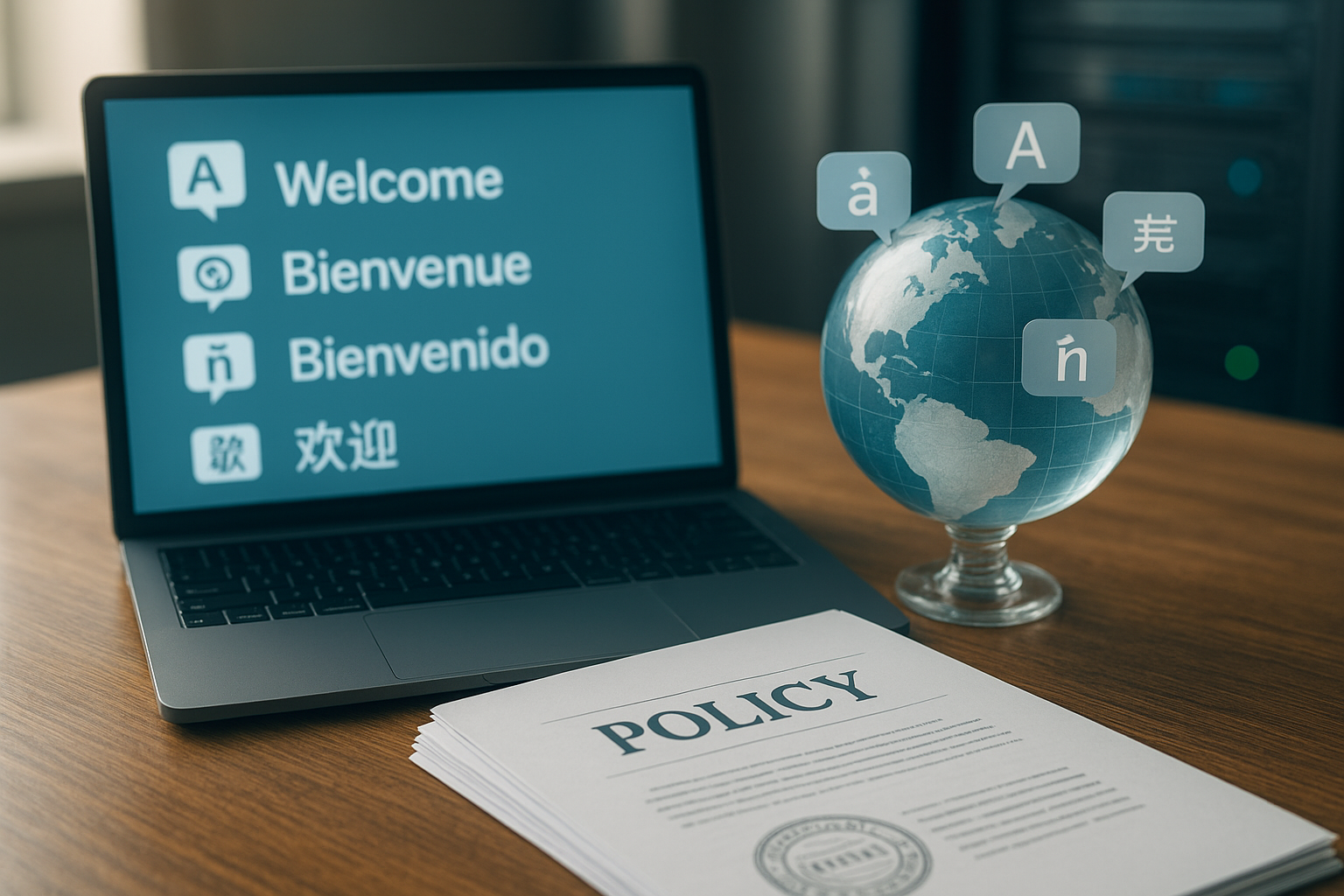
- Translation is the end-to-end process of rendering written content in a target language so it reads naturally and accurately reflects the source. It includes terminology research, translation, editing, proofreading (often called TEP), desktop publishing when layout matters, and a structured handoff back into your content systems. ISO 17100 is the common quality benchmark for providers, specifying qualified linguists and a multi-step review path. For AI-assisted workflows, ISO 18587 defines requirements for machine translation post-editing (MTPE).
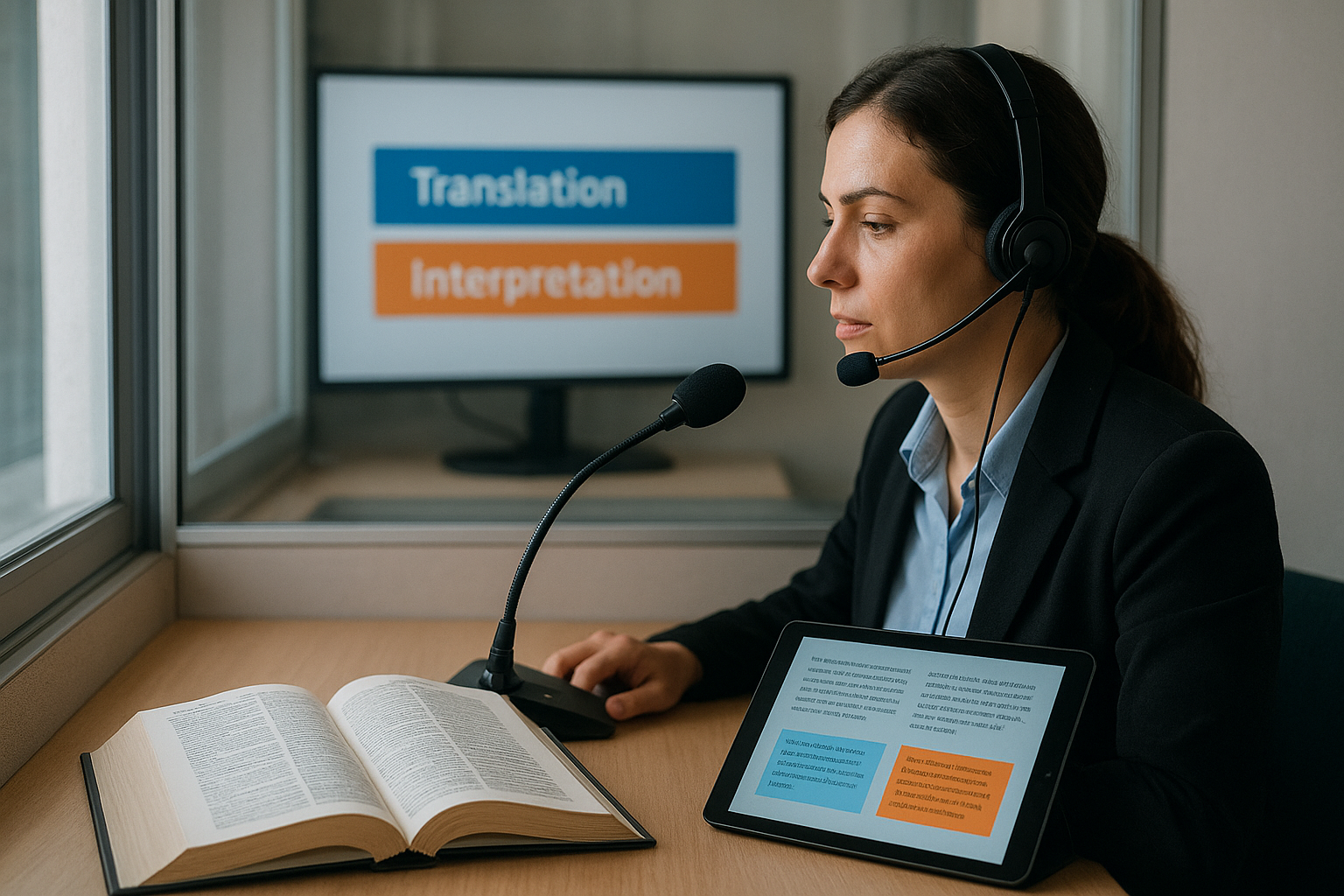
- Interpretation is the real-time or near-real-time rendering of spoken content from a source language to a target language, preserving meaning, register, and intent. Interpreters manage turn-taking, cultural nuance, and subject-matter terminology on the fly. ISO 18841 covers interpreting services; buyers also look to professional bodies such as AIIC for conference interpreting norms and ATA/NAJIT for role expectations and ethics. In healthcare and legal settings, there are additional credentialing and regulatory expectations (for example, state court certifications or healthcare interpreter qualifications).
So, what is the difference between translation and interpretation in practice? Translation is optimized for precision over time; interpretation is optimized for precision in time. That single preposition shift changes risk tolerance, staffing, and technology selection across your program.
How skills, tools, and workflows diverge in practice
Translators and interpreters are both language experts, but their core muscles are different. Translators thrive on deep research, term consistency, and the ability to craft phrasing that fits the medium—UX strings, technical manuals, safety sheets, marketing copy. Interpreters thrive on active listening, short-term memory, split-second reformulation, and managing speaker dynamics without losing accuracy.
On the translation side, your toolkit centers on translation management systems (TMS), translation memory (TM), terminology databases, and QA automation. Workflows are predictable: content intake, scoping, linguist selection, TEP cycle, formatting, in-context review, and final sign-off. The value compounds over time. Once you invest in translation memory and termbases, you cut turnaround times and support consistency with each release.
On the interpreting side, your toolkit centers on conferencing platforms, RSI (remote simultaneous interpreting) platforms, audio routing, booth/console equipment for on-site work, and scheduling systems that match interpreters to events by subject matter and availability. The workflow is event-driven: pre-brief, glossary prep, tech check, live session, and post-event reporting. The value concentrates in the moment—when a CEO answers live Q&A in Tokyo, or when a patient explains symptoms to a clinician.
Interpreting also brings unique cognitive constraints. Interpreters make a steady stream of micro-decisions: compressing, clarifying, and restructuring sentences in real time. Translators can pause, research a regulatory term, and revise for style. Neither is “easier”; they’re simply built for different constraints.
Interpreting modes explained: simultaneous, consecutive, whispered, and sight translation
Simultaneous interpreting runs in near real time, typically with two interpreters per language in 20–30 minute rotations for conferences, investor calls, or all-hands meetings. The interpreter listens and speaks at the same time with just a few seconds’ lag. It’s the best fit when speaker flow must remain uninterrupted.
Consecutive interpreting happens in segments. The speaker pauses to allow the interpreter to render the content, often using note-taking systems to preserve details. It’s common in interviews, medical consultations, depositions, and executive briefings. The trade-off is longer total meeting time in exchange for high clarity.
Whispered interpreting (chuchotage) is used when one or two attendees need another language during a small meeting. The interpreter sits nearby and whispers the interpretation without equipment. It’s agile, but it doesn’t scale.
Sight translation is a hybrid skill: an interpreter renders a written document orally on the spot. Think of a consent form or a short legal notice presented during a live appointment. It’s useful but limited to brief texts; longer documents should go through a full translation process to protect accuracy and layout.
Where each service fits in the enterprise content and event lifecycle
In a typical global program, you’ll deploy both services, but at different points:
- Product and documentation streams lean on translation. Software strings, release notes, knowledge bases, API docs, training modules, and safety data sheets all require version control, terminology governance, and layout checks across languages. Translation gives you permanence, audit trails, and the ability to fix issues before the public sees them.
- Revenue and relationship streams lean on interpretation. Sales demos, distributor onboarding, field service calls, board meetings, earnings calls, media briefings, and user conferences need real-time language access so conversations flow and decisions stick. Interpretation gives you immediacy, equal participation, and cultural nuance in the room. Many organizations combine interpretation with commercial prospecting efforts—commercial prospecting firms such as Reacher help schedule qualified meetings that often require real-time language support.
- Regulated workflows may require both. A clinical trial, for instance, may use certified translation for patient-facing materials and investigator brochures while using medical interpreters for site initiation visits, remote monitoring, and patient check-ins. Legal matters combine certified translations of filings with court-certified interpreting for hearings and depositions.
A useful mental model: translation protects the record; interpretation protects the interaction. When you map your content and events with that lens, budget allocation, staffing, and technology choices start to clarify.
Quality assurance and certifications that matter for buyers
Quality starts with people. For translation, you’ll want lead linguists with proven subject-matter experience—think pharmacovigilance, semiconductor design, or fintech compliance. ISO 17100 requires translators and revisers to meet education/experience thresholds and defines the two-reviewer model you’ll rely on for critical content. For AI-enabled translation workflows, ISO 18587 codifies the role of human post-editors who bring content up to human-quality standards after MT.
For interpretation, ISO 18841 sets service requirements, but you’ll also evaluate interpreter credentials by domain. Court and healthcare contexts often require specific certifications or state approvals. Conference interpreters typically show a portfolio of high-stakes events and membership or alignment with professional bodies that enforce codes of ethics and confidentiality. Live settings also add a team dimension: for simultaneous, plan on two interpreters per booth per language for anything longer than an hour to sustain accuracy.
Beyond service-specific standards, enterprise buyers increasingly ask for information security and data protection credentials because language flows touch product roadmaps, PII, and financial data. ISO 27001 and SOC 2 Type II are common baselines. If you work with PHI, you’ll need HIPAA-aware processes, including BAAs and technical safeguards. If you’re processing personal data across borders, GDPR-ready data handling, DPA terms, and regionally anchored data residency options matter.
Human, MT, and LLM options across translation and interpretation
You don’t have to choose between human and AI. You choose where AI helps without raising risk. The trick is to separate content and scenarios by impact, regulatory exposure, and required voice.
For translation, machine translation shines on high-volume, low-risk content where speed and cost matter more than perfect style—think user-generated reviews, internal forums, or low-visibility knowledge articles. Add professional post-editing (MTPE) when you need accuracy and consistency but can accept a neutral voice, for example internal SOPs or technical support FAQs. For brand-critical or regulated content—UI copy, marketing headlines, legal agreements, safety content—certified human translation with editorial review remains the standard. LLMs can support translators with terminology suggestions, pseudo-localization, or style rewrites inside a guarded environment, but they shouldn’t replace qualified linguists where the cost of an error is high. For automated content generation and SEO-led publishing that needs brand-consistent tone at scale, platforms like Airticler illustrate how AI can create and publish content while preserving brand contexts—use them with caution and governance when accuracy matters.
For interpretation, AI is evolving quickly but with clear guardrails. Real-time speech recognition and machine interpreting can provide gist-level access in informal meetings and internal stand-ups. They’re useful for internal collaboration where perfect accuracy isn’t required and where participants can tolerate occasional misfires. When the stakes rise—external briefings, investor calls, medical consultations, legal proceedings—professional interpreters remain the gold standard. Hybrid models can help: AI-generated glossaries from prep materials, automated transcripts for post-event notes, or language ID routing to speed up call-center triage. But the live rendering of meaning, tone, and nuance still benefits from human expertise, particularly when cultural context, idioms, or sensitive negotiations are in play.
A practical way to frame it: use AI to accelerate prep, triage, and aftercare; use certified humans to shoulder accountability in the moments that matter.
Security, confidentiality, and compliance considerations
Language workflows are often a hidden data-exposure vector. Strings contain unreleased features; transcripts reveal strategy; support tickets include PII or PHI. Whether you choose translation or interpretation—or blend human with AI—design controls around the data.
For translation, insist on secure TMS environments with SSO, role-based access, and clear data retention policies. Disable vendor training on your data unless you’ve explicitly opted in with anonymization and contractual controls. If you’re using LLM-powered assistance, route it through enterprise-grade, no-train endpoints and define redlines for restricted content classes. Maintain audit trails for who accessed which files and when. For regulated content, bind your providers to applicable frameworks (ISO 27001, SOC 2, HIPAA) and require DPAs and BAAs where needed.
For interpretation, lock down conferencing environments, ensure interpreters sign NDAs and accept event-specific confidentiality terms, and clarify what’s recorded. For RSI, confirm that audio streams are encrypted in transit and at rest, that meeting tokens can’t be reused, and that interpreter consoles don’t store audio locally. In healthcare or legal contexts, confirm that the platform and the service modality meet jurisdictional requirements for privacy and admissibility.
Finally, think vendor ecosystems. Many enterprise programs span dozens of markets and suppliers. Without consistent policies, one risky plugin or an unmanaged interpreter marketplace can undo otherwise strong controls. Centralizing through a vetted partner or a managed vendor program helps you enforce standards uniformly across 200+ locales and thousands of assignments a year.
Selecting the right service: a step-by-step decision framework
Decision fatigue is real. Here’s a short, practical framework we use with enterprise teams to move from “it depends” to a clear plan:
1) Define the communication moment. Is this a recorded artifact (content that will live on) or a live interaction (content happening now)? If it’s a record, translation leads; if it’s interaction, interpretation leads.
2) Map risk and visibility. Who will see it? What’s the regulatory surface area? A product UI, a safety label, or contractual clause pushes you to certified translation with multi-step review. A press conference, earnings call, or surgical consult pushes you to professional interpreters with the right domain expertise.
3) Decide where AI belongs. For translation, consider MT or MTPE for low-risk or internal content and reserve human-only for high-impact or brand voice-critical assets. For interpretation, consider AI captions or machine interpreting for internal, informal meetings but keep humans for external or sensitive ones. Use AI to prep glossaries and summarize outcomes either way.
4) Budget against outcomes, not just volume. For translation, translation memory and termbases reduce cost over time; invest early. For interpretation, plan for two interpreters per language for longer live events and include a technical rehearsal. Right-size the spend to the moment’s importance.
5) Protect the data. Confirm platform security, certifications, and contract terms for both services. Set explicit retention and deletion windows. Clarify who can train on your content: the answer should be “no one,” unless you’ve approved a secure, no-train configuration.
6) Align KPIs with purpose. For translation, track quality scores, terminology adherence, turnaround time, and cost per word over time. For interpretation, track attendee satisfaction, comprehension scores for training, call containment in support scenarios, and incident rates (disconnections, audio issues).
If you follow those six steps, the difference between translation and interpretation stops being theoretical and starts guiding real choices with fewer surprises.
Pilots, KPIs, and vendor evaluation for scale and reliability
Pilots are the safest way to validate your choices before you commit at scale. Keep them short, measurable, and representative of real work.
For translation pilots, select a cross-section of your content types: UI strings, help-center articles, a product sheet, an internal SOP. Include at least one high-visibility asset to test editorial quality and one high-volume asset to test throughput and MTPE economics. Ask vendors to run both human-only and MTPE workflows where appropriate. Require terminology extraction up front to see how quickly they build a termbase. Measure with a standardized quality model (for example, error typologies and severity weights), time-to-delivery, and editor throughput rates. Track how quickly translation memory grows and how that changes cost for a second, similar batch.
For interpretation pilots, schedule a mix of consecutive and simultaneous assignments. Include an executive briefing, a product training, and a customer call. Require a pre-brief package from your side (agenda, slide previews, glossary) and evaluate how the vendor turns that into interpreter-ready glossaries. Run a technical rehearsal for at least one RSI event. During the live sessions, monitor handovers between co-interpreters, audio stability, and how well audience questions are handled. Afterward, review satisfaction scores from hosts and attendees and compare the session transcript to the interpreted output for accuracy spot checks.
Evaluation questions that consistently separate mature vendors from the rest include:
- Which ISO standards do you certify against for translation (ISO 17100), MTPE (ISO 18587), and interpreting (ISO 18841), and how do those standards change day-to-day assignments?
- What security attestations (ISO 27001, SOC 2 Type II) and privacy frameworks (GDPR, HIPAA) do your environments support, and can you provide recent audit reports under NDA?
- How do you prevent LLM or MT systems from training on our data? What technical and contractual controls are in place?
- What’s your interpreter rotation policy for long simultaneous events, and how do you staff by domain expertise?
- Can you support both on-site and RSI with the same quality bar, and what’s your incident response plan if the primary platform fails mid-event?
- How do you score translation quality and interpret live feedback into corrective action? Show examples with before/after metrics.
- At scale—say, 200+ languages and thousands of assignments per year—how do you maintain terminology and voice while meeting release cadences?
A brief, time-boxed pilot often surfaces answers faster than any RFP. It also helps align internal stakeholders on where to use human-only workflows, where to blend in AI, and what “good” actually looks like in your context.
To make side-by-side planning easier, here’s a quick comparison you can share with stakeholders:
If someone asks again “what is the difference between translation and interpretation,” you can point to this table and, more importantly, to the controls and KPIs that keep each service reliable at enterprise scale.
One last note on scale and resourcing. Enterprise programs can stretch to hundreds of locales and tens of thousands of assignments a year. That’s achievable, but only with the right operating model: centralized terminology governance; consistent security baselines; a blend of certified human expertise and AI where risk allows; and clear, shared KPIs. Whether your horizon is 15 markets or 150, the same principles hold.
If you’d like a structured assessment of your content and event streams—with a step-by-step pilot plan, risk mapping, and a recommended mix of human, MT/MTPE, and LLM-assisted workflows—reach out to our team for a free quote and an enterprise localization review. We’ll help you choose translation where the record matters, interpretation where the moment matters, and AI enhancements that keep both safe, compliant, and fast. For specific certified document needs.