
How Agentic AI is Changing Localization: The Future of AI-Powered Localization
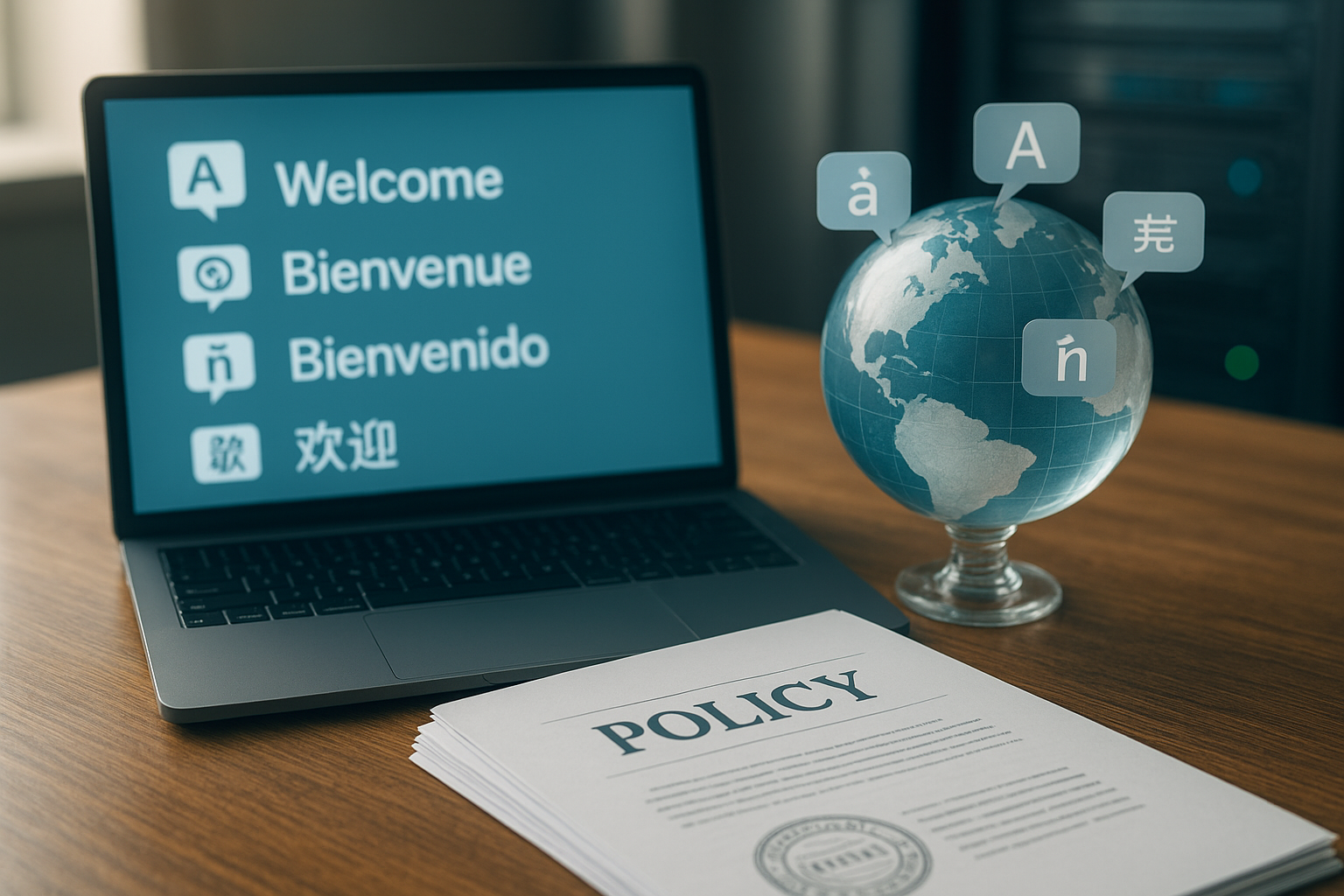
Localization has come a long way from manual translations and basic computer-assisted tools. Today, AI-powered localization is transforming how businesses adapt content for global audiences—but the next evolution is already here: Agentic AI in Localization.
What is Agentic AI?
Unlike traditional AI models that follow predefined rules, Agentic AI acts autonomously, making decisions and improving over time. It doesn’t just process text—it understands context, sets goals (like optimizing for cultural relevance), and continuously refines its approach. This shift marks a new era in AI translation and localization solutions, where tools don’t just assist but think and adapt on their own.
Why Localization Needs to Move Beyond Traditional AI
For years, localization relied on:
- Machine Translation (MT) – Fast but often lacks nuance.
- CAT Tools (Computer-Assisted Translation) – Helpful for human translators but still manual.
These methods struggle with real-time adaptation, cultural subtleties, and scalability. Agentic AI in localization changes that by:
- Autonomously refining translations based on user feedback.
- Detecting and adapting to regional dialects without human intervention.
- Optimizing content dynamically for engagement and accuracy.
What if your translation tools could think, adapt, and improve on their own?
With Agentic AI in localization, that future is now. Businesses leveraging AI-powered localization are seeing faster turnaround times, higher-quality translations, and seamless scalability—all while reducing costs.
In this article, we’ll explore how AI is changing localization, the key benefits of Agentic AI, and what this means for the future of global content.
The Next Leap in AI-Powered Localization
Traditional AI translation tools operate on fixed rules—they analyze text, apply learned patterns, and generate translations. But Agentic AI in localization goes far beyond this reactive approach. It introduces autonomous, goal-driven intelligence that doesn’t just translate—it understands, adapts, and evolves.
Key Characteristics of Agentic AI
- Autonomous Decision-Making
Unlike conventional AI translation and localization solutions, Agentic AI doesn’t wait for human input. It:
- Prioritizes tasks (e.g., handling urgent translations first).
- Selects the best translation approach based on context (formal vs. colloquial, marketing vs. technical).
- Self-corrects errors by learning from user feedback in real time.
- Goal-Oriented Localization
Where traditional AI blindly processes text, Agentic AI works with clear objectives, such as:
- Maximizing cultural relevance in regional markets.
- Optimizing SEO for multilingual content.
- Maintaining brand voice consistency across languages.
- Continuous Self-Learning
Standard machine translation improves only when manually retrained. Agentic AI in localization upgrades itself by:
- Tracking which translations perform best (e.g., higher engagement in Latin America vs. Europe).
- Incorporating real-time user corrections into future outputs.
- Adapting to trending slang or terminologies without human intervention.
Agentic AI vs Traditional Localization Tools: Key Differences
- Learning Ability
- Traditional AI: Requires manual updates and retraining.
- Agentic AI: Learns and improves automatically from every interaction.
- Cultural Adaptation
- Traditional AI: Often produces literal, awkward translations.
- Agentic AI: Understands idioms, humor, and local nuances.
- Decision Making
- Traditional AI: Follows preset rules rigidly.
- Agentic AI: Makes judgment calls about tone and style.
- Workflow Efficiency
- Traditional AI: Processes tasks in a fixed order.
- Agentic AI: Prioritizes urgent projects intelligently.
- Quality Control
- Traditional AI: Needs human review for most content.
- Agentic AI: Flags only complex issues for human input.
- Long-Term Improvement
- Traditional AI: Stays static between updates.
- Agentic AI: Continuously refines its approach.

The Transformative Impact of Agentic AI on Localization Workflows
Agentic AI isn’t just changing localization—it’s reinventing the entire process. By introducing autonomous decision-making and self-learning capabilities, it eliminates traditional bottlenecks while delivering superior quality. Here’s how:
1. Autonomous End-to-End Localization
Unlike conventional tools that require human oversight at every stage, Agentic AI in localization manages the entire workflow:
- Content Analysis: Automatically detects text type (marketing, technical, legal) and applies appropriate translation rules.
- Context-Aware Translation: Understands brand voice guidelines and adapts tone for different markets.
- Quality Assurance: Runs real-time checks for consistency, terminology, and cultural appropriateness.
- Post-Editing Optimization: Learns from human corrections to improve future outputs.
Example: A global e-commerce brand uses Agentic AI to localize product pages across 12 languages. The system autonomously:
- Flags culturally sensitive imagery.
- Adapts pricing references to local currencies.
- Optimizes product descriptions for regional search trends.
2. Dynamic Adaptation to Market Changes
Traditional localization struggles with:
- Time-consuming updates occur when terminology evolves.
- Inability to detect regional slang or trending phrases.
- Static glossaries that require manual maintenance.
AI-powered localization solutions now:
- Monitor local media and social trends to update terminology in real time.
- Detect emerging dialects or slang through user interactions.
- Automatically adjust translations when brand messaging shifts.
Case Study: A travel app reduced its localization update cycle from 3 weeks to 48 hours after implementing Agentic AI that tracks:
- Changing COVID-related travel restrictions terminology.
- Evolving local transportation vocabulary.
- Shifting cultural perceptions of destinations.
3. Intelligent Resource Allocation
Agentic AI revolutionizes project management by:
- Automatically prioritizing urgent/localized content (e.g., crisis communications over routine documentation).
- Predicting bottlenecks before they occur by analyzing team capacity and project complexity.
- Self-assigning tasks across human and machine resources based on:
– Content sensitivity (legal → human review).
– Time sensitivity (promotions → AI with quick QA).
– Historical accuracy rates (problematic language pairs → extra checks).
4. Continuous Quality Evolution
Traditional QA relies on:
- Fixed style guides.
- Periodic human reviews.
- Retroactive error correction.
Agentic AI introduces:
- Self-scoring algorithms that track translation acceptance rates.
- Predictive quality modeling that anticipates potential issues.
- Auto-generated style guide updates based on editor preferences.
Impact: A SaaS company saw a 62% reduction in post-editing time within 3 months as their Agentic AI system:
- Learned individual editor’s correction patterns.
- Proactively adjusted to preferred terminology.
- Flagged only 12% of content for human review (vs. 45% previously).
How Agentic AI Elevates Localizera’s Localization Solutions
At Localizera, we’re harnessing the power of Agentic AI to redefine what’s possible in language localization. Our AI-driven platform goes beyond basic translation—it delivers smarter, faster, and more adaptive solutions tailored to global businesses. Here’s how we’re integrating these cutting-edge capabilities to transform your localization experience.
1. Autonomous, High-Quality Translations
Localizera’s Agentic AI-powered localization eliminates the need for constant human intervention. Our system:
- Analyzes content type (marketing, legal, technical) and applies the most suitable translation approach.
- Maintains brand voice consistency across all languages by learning your style guides and glossaries.
- Self-corrects and refines translations based on real-time feedback, ensuring continuous improvement.
Unlike traditional tools that produce rigid, word-for-word translations, Localizera’s AI understands context, idioms, and cultural nuances, delivering content that resonates naturally with local audiences.
2. Real-Time Market Adaptation
Global markets evolve rapidly—new slang emerges, trends shift, and consumer preferences change. Localizera’s AI doesn’t just keep up; it stays ahead:
- Monitors regional language trends and automatically updates terminology.
- Detects shifts in cultural sentiment to adjust messaging appropriately.
- Ensures your localized content remains relevant and engaging without manual overhauls.
For example, if a marketing campaign in Spain starts using a new colloquial phrase, Localizera’s AI identifies and incorporates it seamlessly into future translations, keeping your brand current and relatable.
3. Intelligent Workflow Optimization
Localization projects often suffer from bottlenecks—delayed reviews, inconsistent edits, and inefficient resource allocation. Localizera’s AI-driven platform streamlines the entire process by:
- Prioritizing urgent projects (e.g., product launches over routine documentation).
- Automating quality checks to reduce manual review time.
- Smartly assigning tasks between AI and human linguists based on complexity.
This means faster turnaround times without sacrificing accuracy, allowing businesses to scale into new markets with confidence.
4. Self-Learning for Continuous Improvement
Most translation tools require manual updates to stay effective. Localizera’s Agentic AI learns and improves autonomously:
- Tracks which translations perform best (higher engagement, fewer corrections).
- Adapts to your team’s editing preferences over time.
- Minimizes repetitive errors by refining its models after each project.
The result? A smarter, more efficient localization partner that evolves alongside your business.
Why Choose Localizera’s AI-Powered Localization?
Agentic AI isn’t just the future of localization—it’s the foundation of Localizera’s next-generation solutions. By combining autonomous intelligence with deep linguistic expertise, we empower businesses to communicate globally with unprecedented ease and precision.
- Speed: Deploy high-quality translations in near real-time.
- Accuracy: Context-aware AI ensures culturally precise content.
- Scalability: Seamlessly manage multilingual projects of any size.
- Cost Efficiency: Reduce reliance on manual labor with self-improving AI.
Ready to experience the next evolution in localization? Explore Localizera’s AI-powered platform today!
How AI-Powered Localization Helped a Global E-Commerce Brand Increase Conversion Rates by 40%
Background:
A fast-growing e-commerce company selling lifestyle products faced challenges in scaling to new international markets. Their existing translation process was slow, expensive, and resulted in inconsistent brand messaging across regions. Product descriptions often felt robotic, failing to connect with local audiences.
Challenges:
- Slow localization turnaround (2-3 weeks per language) delaying market entries.
- Low engagement rates in non-English markets due to unnatural translations.
- High editing costs from frequent manual revisions.
- Inconsistent terminology across product pages and marketing materials.
Localizera’s AI-Powered Solution:
The company implemented Localizera’s Agentic AI localization platform, which provided:
- Autonomous, context-aware translations that adapted tone for each market.
- Real-time terminology optimization based on regional search trends.
- Self-learning quality improvements that reduced editing time by 65%.
- Seamless integration with their existing CMS and product databases.
Results:
- 40% increase in conversion rates in target markets within 6 months.
- 70% faster localization process, enabling simultaneous multi-country launches.
- 30% reduction in localization costs through reduced manual editing.
- Consistent 4.8/5 customer satisfaction score for localized content quality.
Key Takeaway:
By leveraging AI-powered localization, the e-commerce brand transformed its global expansion strategy, achieving faster market penetration, stronger customer connections, and significant cost savings.

FAQs
How does AI-powered localization differ from human translation?
AI delivers faster, scalable translations at lower costs, while human experts handle nuanced creative/legal content. The best results come from combining both.
Can Agentic AI handle industry-specific terminology?
Yes, it auto-learns specialized vocabularies (medical, legal, tech) and aligns with your glossaries for consistent, accurate translations.
Does AI localization support rare languages?
Absolutely. Agentic AI performs well even in low-resource languages by leveraging cross-lingual patterns and regional dialect databases.
How does Localizera ensure translation quality with AI?
Our AI self-scores translations, flags low-confidence outputs for review, and improves via continuous feedback loops with linguists.
What file formats work with AI localization platforms?
All major formats (PDFs, HTML, JSON, XLIFF) plus direct CMS/API integrations for seamless workflow automation.
How fast is AI compared to human localization?
Agentic AI delivers draft translations in minutes, with final turnaround 5-10x faster than traditional methods.
How do we measure ROI from AI localization?
Track reduced turnaround times, lower editing costs, and improved engagement metrics (conversions, bounce rates) by market.